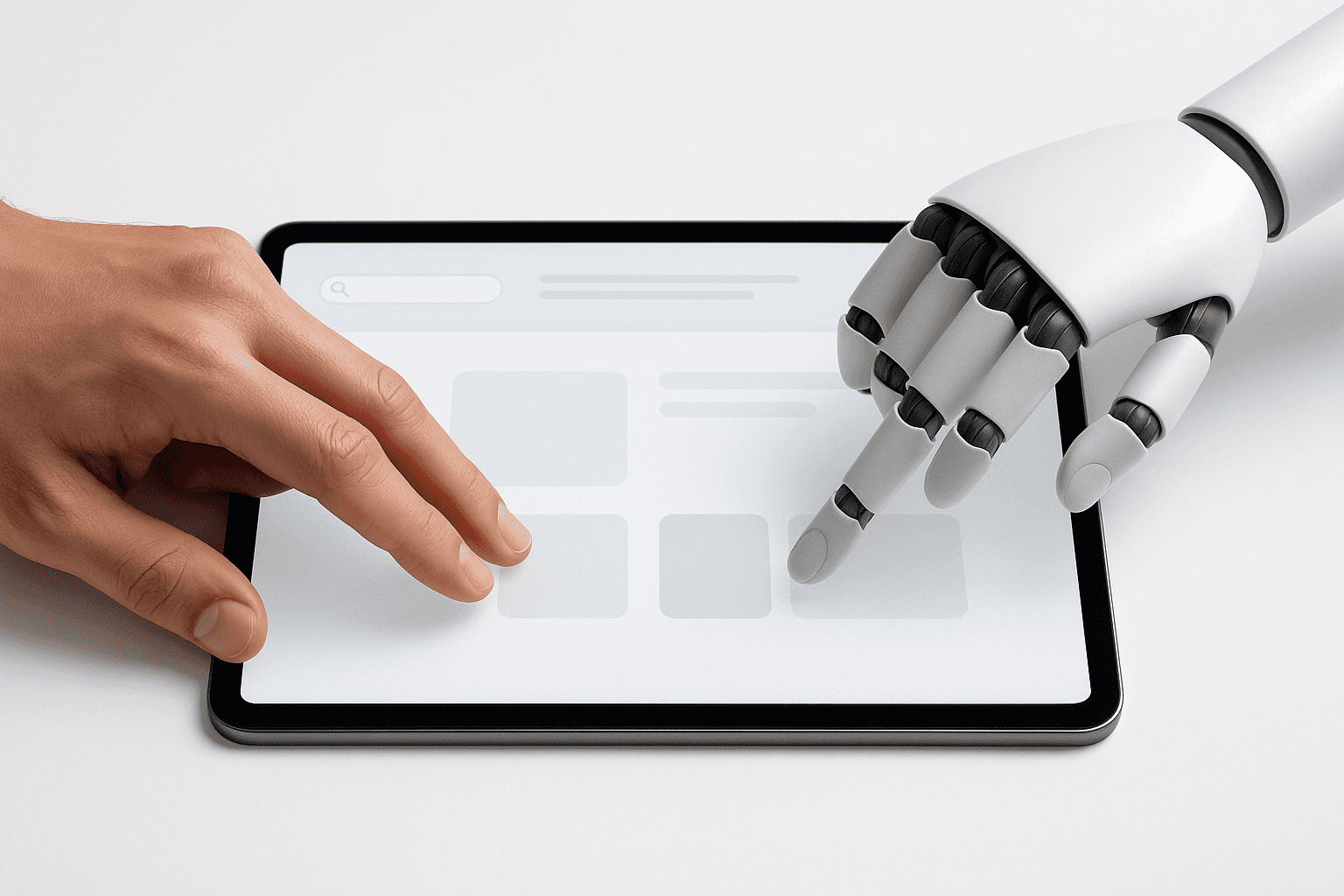
Mastering AI as a Designer: How to Stay Essential, Strategic, and In Control
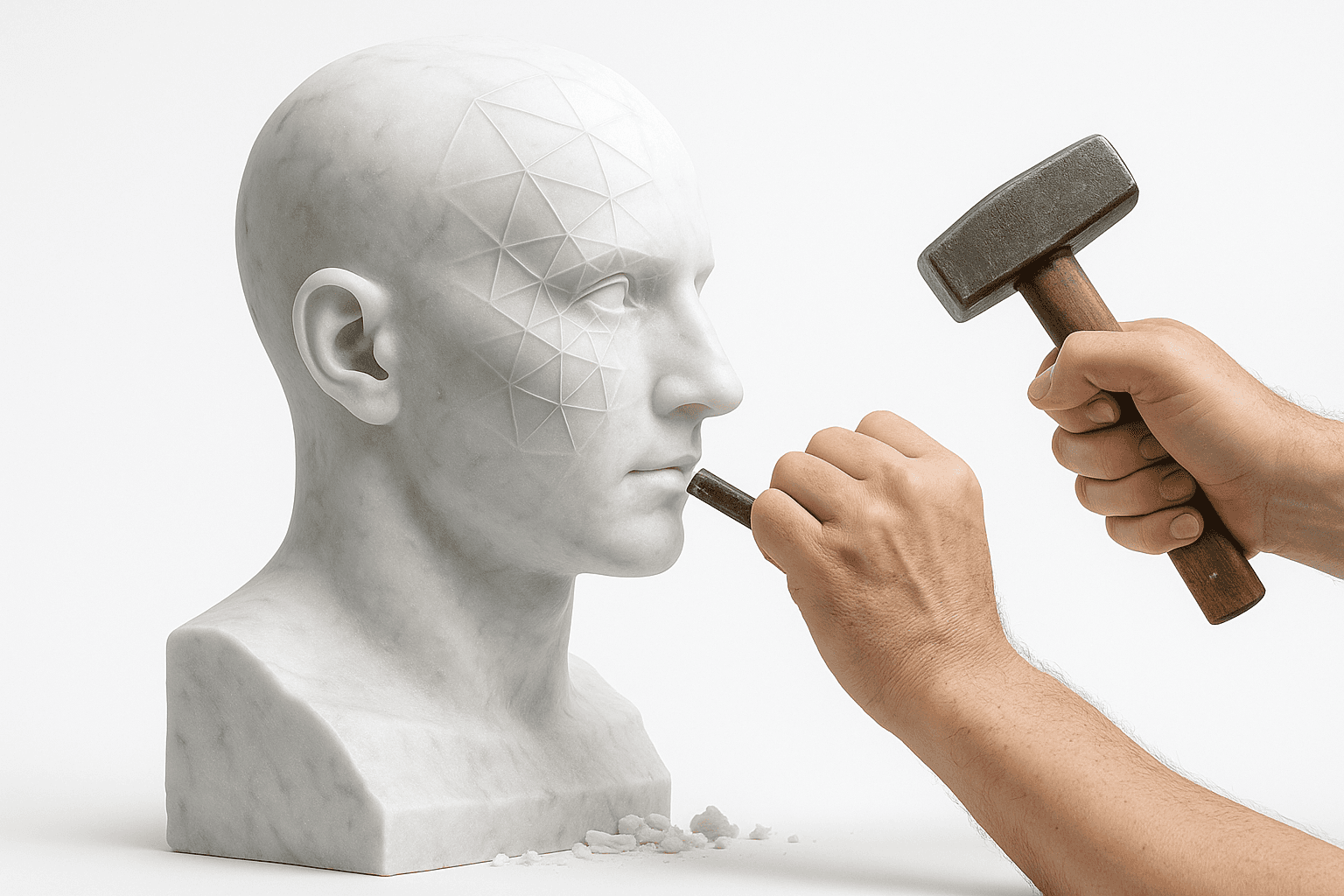
AI is now part of our daily design reality. It is inside our tools, shaping our workflows, and influencing the products we build.
Yes, it can make us faster. Yes, it can automate repetitive work. But speed without focus just pushes us toward mediocre outcomes faster. The designers who will thrive in the AI era are the ones who use it deliberately, with the goal of creating better results, not just quicker ones.
Here is how to make sure AI works for you instead of letting it quietly erode your craft.
What AI Actually Improves and How to Use It
1. Use speed to free up time for higher-value work
What to do today: Identify the tasks that consume your time but do not require your core design judgment. Use AI for those immediately. Examples: resizing images, generating placeholder copy, creating quick layout variations.
Then block out that reclaimed time on your calendar for high-value work like validating flows, refining usability, and aligning with stakeholders. If you do not protect that time, it will be filled with more low-value tasks.
2. Use AI to expand exploration, but set evaluation rules
AI can help you test more directions in minutes. The risk is drowning in options and losing clarity.
What to do today: For every AI-generated batch, set a strict evaluation process:
Define 3 criteria for success before you generate anything (e.g., meets accessibility standards, fits brand tone, supports the primary user flow).
Select only the top 2–3 options for deeper development. Archive the rest.
This keeps your exploration purposeful instead of overwhelming.
3. Automate the repetitive, but keep the judgment human
Offload the mechanical work, but keep ownership of every decision that affects the user experience.
What to do today: Create a “hand-off” list for AI tools. These are the things you never need to do manually again, like color palette variations or converting text to different formats. Then create a “human decision” list. These are moments where you must review, interpret, and adjust — like prioritizing features or resolving conflicting user needs.
Where Designers Still Hold the Keys and How to Strengthen Your Role
4. Add human context to AI research
AI can summarize and cluster survey data, but it cannot feel the frustration in a user’s voice or spot subtle cultural nuances.
What to do today: Combine AI summaries with a handful of real user interactions each week — watch a testing session, listen to call recordings, or review open-text feedback without filtering. Then annotate your AI summary with context you gathered manually.
5. Keep testing real humans in real conditions
Prototypes generated with AI can be misleading if you do not test them with actual users.
What to do today: Before signing off on any AI-assisted design, run at least 3 quick usability sessions with real people. Even a 15-minute session over video can reveal friction points AI simulations missed.
6. Stay in the high-stakes conversations
Trade-offs, product priorities, and roadmapping decisions will not be made by AI. Those are still human moments — and they are where influence is earned.
What to do today: Make it a habit to show up in discussions about scope, timelines, and feature prioritization. Come prepared with one data-backed point about the user impact of each option. This positions you as a strategic partner, not just a deliverables owner.
How to Use AI Without Losing Your Edge
Audit your weekly tasks. Move low-judgment work to AI, reserve your time for strategy and problem solving.
Pair every AI-generated option with a human validation step.
Teach yourself to interrogate AI output. Ask “Why is this the best option for the user?” before moving forward.
Track how much time AI saves you each week and reinvest that time in research, refinement, or mentorship.
Final Word
AI is here to stay. The designers who treat it as an extension of their judgment will rise. The ones who let it replace their judgment will fade into the background.
Use AI to move faster, but always direct that speed toward work that matters.
Use AI to explore more, but always refine with human insight.
Use AI to handle the repetitive, but keep your influence in the moments that define the product.
The future belongs to the designers who can combine the scale of AI with the irreplaceable clarity, empathy, and leadership of a human mind.